
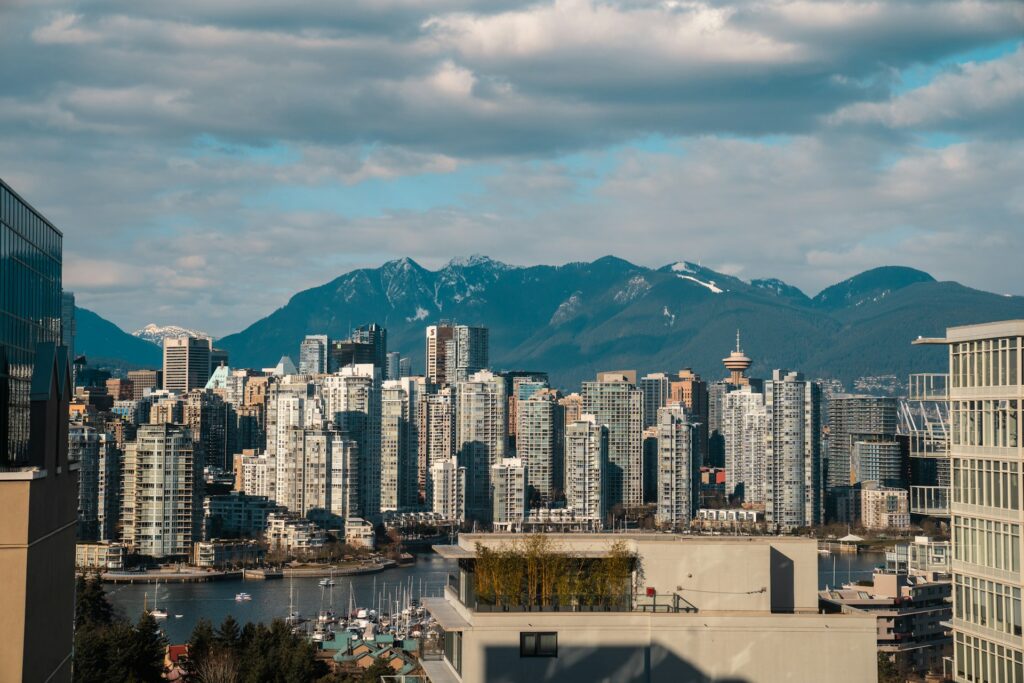
A single adult in Metro Vancouver needs roughly $3,200 to $3,500 per month to cover basics in 2026, making it one of the most expensive places to live in Canada. British Columbia has the highest minimum wage of any province at $18.25 per hour as of June 1, 2026. It also has some of the most expensive housing in the country. Vancouver’s average one-bedroom rent is $2,530 per month according to CMHC data, down from a 2023 peak of roughly $2,900 but still more than a full month of take-home pay at minimum wage.
$5
Flat fee, any amount
15 min
Via Interac e-Transfer
0
No credit check required
Housing Costs in BC (2026)
Housing is the dominant cost for BC residents and the main reason the province’s cost of living remains high relative to wages. Rental costs and ownership prices vary sharply by city, but even smaller BC centres like Kelowna sit well above national rental averages. The table below reflects current CMHC and rental market data as of mid-2026.
| City | Avg 1-Bed Rent/Month | Avg Home Price (All Types) |
|---|---|---|
| Metro Vancouver | $2,530 | $1.85M (detached); $790K (condo) |
| Victoria | $2,050 | ~$870,000 |
| Kelowna | $1,800 | ~$700,000 |
| Prince George | $1,200 | ~$420,000 |
Metro Vancouver detached home prices average approximately $1.85 million, placing outright ownership out of reach for the majority of households at current income levels. Condos average roughly $790,000. A 20% down payment on a $790,000 condo requires $158,000 in cash before closing costs. At the median BC household income of $90,000 per year, saving that amount takes many years even with aggressive savings habits.
Outside the Lower Mainland, housing costs fall meaningfully. Prince George offers the most affordable rental market of any BC city of reasonable size at around $1,200 per month for a one-bedroom. Remote and rural communities can be even cheaper, though employment and service access vary significantly.
Why Vancouver Rents Are Down From Their 2023 Peak
Metro Vancouver average rents peaked at roughly $2,900 per month for a one-bedroom in mid-2023, the highest on record. By mid-2026, that average is down to approximately $2,530, a decline of about 12.5%. Several factors are behind the softening.
New rental supply completed in 2024 and 2025 added meaningful inventory in several Vancouver-area municipalities. Purpose-built rental construction accelerated after federal incentives removed GST on new rental builds in 2023. At the same time, population growth in Metro Vancouver slowed as federal temporary resident numbers declined under immigration policy changes. Fewer newcomers competing for the same units reduced the extreme rental pressure seen in 2022 and 2023.
The decline is real but limited. At $2,530, Vancouver rents are still the second-highest in Canada after Toronto, and still more than 75% of a minimum-wage worker’s gross monthly income. The softening brings Vancouver back to roughly 2022 levels, not 2019 levels. Vacancy rates remain low by most national measures, and any reversal in new supply completions or population trends could push rents back upward.
Grocery and Food Costs
A Metro Vancouver family can expect to spend approximately $1,400 to $1,600 per month on groceries in 2026. Single adults typically spend $500 to $700 per month depending on diet and shopping habits. These figures reflect ongoing food inflation that has run above the general CPI for several years, driven partly by global supply chains, labour costs, and the tariff-related price pressures on Canadian consumers in 2026.
On the tax side, BC charges 5% GST plus 7% PST on most goods, for a combined 12% sales tax. Groceries are exempt from PST and are subject only to 5% GST on basic food items. This exemption provides meaningful relief on food spending compared to the 12% rate on general purchases. Restaurants and prepared food don’t receive the same exemption: eating out carries the full tax burden on top of Vancouver’s higher menu prices.
For a single person trying to manage food costs, cooking at home in Metro Vancouver typically runs about $500 to $600 per month. Budget grocery chains and discount options including No Frills and Walmart locations have expanded in the region, and weekly price matching between flyer deals remains the most effective practical tool for reducing grocery bills.
Getting Around: Transit vs Driving in BC
Metro Vancouver has one of the most comprehensive transit networks in Canada, operated by TransLink. Monthly pass costs depend on how many fare zones you need to cross.
| Transit Option | Monthly Cost |
|---|---|
| TransLink Zone 1 (Vancouver, Burnaby, New Westminster) | ~$110/month |
| TransLink All Zones (includes Surrey, Langley, Coquitlam) | ~$200/month |
| Victoria (BC Transit monthly pass) | ~$95/month |
Car ownership in Metro Vancouver runs significantly higher than the transit alternative. ICBC’s mandatory basic insurance is set provincially and averages roughly $1,832 per year ($153 per month) when combined with optional coverage. Gas in BC averages approximately $1.68 per litre and is consistently the highest in Canada, with Metro Vancouver stations often reaching $1.72 to $1.80 per litre. Parking, loan or lease payments, and maintenance bring total monthly car ownership costs to an estimated $900 to $1,400 depending on the vehicle and driving frequency. For tips on bringing that number down, see our guide to lowering car insurance in Canada.
For workers whose jobs are within the SkyTrain or bus network, transit is a significant cost advantage over car ownership. The monthly cost difference between a Zone 1 transit pass ($110) and the low end of car ownership ($900) is $790 per month, or $9,480 per year. That gap matters considerably at minimum wage.
Utilities: BC Hydro vs National Average
BC Hydro electricity rates are among the lowest in Canada because BC generates the majority of its power from hydroelectric dams. Average residential electricity bills run $80 to $110 per month for a typical apartment. This is a genuine cost advantage: comparable electricity costs in Alberta, Ontario, or Nova Scotia run $120 to $200 per month or more depending on consumption and rate tier.
Natural gas service through FortisBC runs $80 to $130 per month in winter months for a heated unit. Summer bills are substantially lower. Buildings that use electric baseboard heating rather than gas avoid the FortisBC bill entirely and benefit more directly from BC Hydro’s low rates.
Internet service typically costs $70 to $90 per month for residential broadband from providers including Telus, Shaw (now Rogers), and independent resellers like TekSavvy. Phone plans for a single line with reasonable data allowances run $50 to $80 per month on major carriers, with lower-cost options available through budget MVNOs. Combined utility and connectivity costs for a typical Metro Vancouver apartment run approximately $250 to $350 per month across electricity, gas, internet, and phone.
BC Income and Taxes
The median household income in BC is approximately $90,000 per year. Average individual employment income is roughly $62,000. These numbers sit above national averages but below what’s required to comfortably afford Metro Vancouver housing costs without significant financial strain.
BC’s provincial income tax rates in 2026 are as follows:
| Taxable Income (BC) | Provincial Rate |
|---|---|
| Up to $45,654 | 5.06% |
| $45,654 to $91,310 | 7.70% |
| $91,310 to $104,835 | 10.50% |
| $104,835 to $127,299 | 12.29% |
| $127,299 to $172,602 | 14.70% |
| $172,602 to $240,716 | 16.80% |
| Above $240,716 | 20.50% |
At the average individual income of $62,000, combined federal and provincial marginal rates in BC run approximately 31 to 34%. After-tax monthly take-home on $62,000 gross is roughly $4,100 to $4,400 depending on applicable deductions and credits. At BC minimum wage of $18.25 per hour, a standard 40-hour week produces gross earnings of approximately $37,960 per year, with take-home after tax of roughly $2,400 to $2,500 per month.
BC also charges 7% PST on most goods. PST doesn’t apply to groceries or to residential rent. Those two exemptions partially offset the high nominal sales tax rate for lower-income households where food and housing dominate spending.
Minimum Wage vs Living Wage in BC
BC’s minimum wage of $18.25 per hour is the highest of any province in Canada. The next closest is Ontario at $17.60 (rising to $17.95 in October). Alberta sits at $15.00, unchanged since 2018. For the full comparison across every province and territory, see the minimum wage Canada 2026 guide.
The Metro Vancouver living wage, calculated annually by the Canadian Centre for Policy Alternatives (CCPA BC), is approximately $27.05 per hour based on 2025 data (the most recent full calculation available). This figure represents the hourly rate a single adult needs to earn to cover basic costs in Metro Vancouver without relying on government subsidies or debt, assuming full-time employment.
The gap between BC’s minimum wage ($18.25) and the Metro Vancouver living wage ($27.05) is $8.80 per hour. On a 40-hour week worked 52 weeks per year, that gap represents $18,304 in annual earnings. BC’s minimum wage is approximately 67% of the Metro Vancouver living wage, which is the closest ratio of minimum-to-living wage of any major province in Canada. That’s a real achievement relative to where BC was a decade ago. The gap is still substantial. If you’re in that position, our guide to living paycheque to paycheque in Canada covers practical steps for closing the gap.
Key Takeaway
BC’s minimum wage of $18.25/hour is the highest in Canada, but it covers only 67% of the Metro Vancouver living wage of $27.05/hour (CCPA BC, 2025). The gap is $8.80/hour, or about $18,300/year.
Sample Monthly Budget: BC at Different Income Levels
The table below shows a realistic Metro Vancouver monthly budget for two income levels: a full-time minimum wage worker and a median-income household. Both assume a single-bedroom rental in Metro Vancouver at the current average rent of $2,530.
| Expense | Min Wage ($18.25/hr) | Median Income ($90K/yr) |
|---|---|---|
| Rent (1-bed, Metro Vancouver) | $2,530 | $2,530 |
| Groceries | $500 | $700 |
| Transit (all zones) | $200 | $200 |
| Utilities (electricity, internet, phone) | $180 | $220 |
| Phone | $60 | $80 |
| Total monthly expenses | ~$3,470 | ~$3,730 |
| Take-home monthly (after tax) | ~$2,430 | ~$5,500 |
| Monthly surplus / deficit | -$1,040 | +$1,770 |
The minimum wage scenario produces a monthly deficit of roughly $1,040 even before any discretionary spending, clothing, personal care, or emergency costs. This isn’t a budgeting problem; it’s a math problem. At current Metro Vancouver rents, a single full-time minimum wage worker can’t cover basic costs on one income. A second earner, a roommate sharing costs, or housing in a lower-cost BC city are the primary ways minimum wage workers close the gap.
The median-income scenario produces a surplus of $1,770 per month before savings, debt repayment, or discretionary spending. That’s a livable position, though building toward home ownership at Metro Vancouver prices still requires many years of disciplined saving on a $90,000 household income. At that income level, building an emergency fund and contributing to an RRSP are both within reach.
When a bill lands before payday, the issue is timing, not income. NotchUp lets you access wages you’ve already earned, with a flat $5 fee, no credit check, and Interac e-Transfer in about 15 minutes. NotchUp is licensed in BC (licence #86443) and regulated by Consumer Protection BC. An advance covers a timing gap between a bill and your next paycheque; it isn’t a solution for Metro Vancouver’s structural affordability gap between minimum wage and living costs.
Frequently Asked Questions
What is the average cost of living in BC per month in 2026?
A single adult living in Metro Vancouver on a basic budget should expect to spend at least $3,200 to $3,500 per month covering rent, groceries, transit, utilities, and phone. That figure doesn’t include savings, clothing, entertainment, or any irregular expenses. In smaller BC cities like Kelowna or Victoria, the same basic budget runs $2,600 to $2,900 per month. Prince George and other interior cities can be managed for $2,000 to $2,400 per month at the basic level.
Is Vancouver more expensive than Toronto in 2026?
Vancouver and Toronto are comparable in overall cost, with each city holding advantages in different categories. Toronto’s average one-bedroom rent is slightly higher than Vancouver’s current $2,530. Vancouver has significantly cheaper electricity due to BC Hydro’s hydro-based rates. Toronto residents pay Ontario’s 13% HST on most purchases versus Metro Vancouver’s effective 12% on non-grocery purchases. Car insurance in Ontario can run higher than ICBC rates for equivalent coverage. The two cities are close enough that the difference is marginal for most households; both are among the most expensive cities in Canada.
How much do you need to earn to live comfortably in Vancouver in 2026?
The CCPA BC living wage calculation for Metro Vancouver is approximately $27.05 per hour (2025 data), which represents the minimum needed for a basic but stable life for a single adult. To comfortably rent a one-bedroom, save modestly, and cover unexpected costs without regular financial stress, most financial planners suggest an after-tax income of at least $4,500 to $5,000 per month, which corresponds to a gross income in the range of $70,000 to $80,000 per year. Home ownership at Metro Vancouver prices requires considerably higher income or pre-existing equity.
What is the cheapest city to live in BC?
Among BC cities with reliable employment and services, Prince George has among the lowest housing costs, with average one-bedroom rents around $1,200 per month and home prices roughly $420,000. Other lower-cost options include Kamloops, Williams Lake, and Terrace in the interior and north. Smaller communities can be even more affordable, though job markets and access to services differ significantly from urban centres. For anyone flexible on location and working remotely, interior BC cities represent the most practical way to reduce housing costs while remaining within the province.
Does BC minimum wage cover basic living costs in 2026?
In Metro Vancouver, no. A full-time BC minimum wage worker earns roughly $2,430 per month after tax. Average one-bedroom rent alone is $2,530. The math doesn’t work for a single minimum wage earner renting alone in Vancouver. Outside Metro Vancouver, the picture improves: in Prince George or the interior, a single minimum wage income can cover basic costs, often with a modest surplus. BC’s minimum wage is the highest in Canada, but Metro Vancouver’s rent level means the provincial wage still falls short of what Metro Vancouver actually costs.
Is it cheaper to live in Victoria or Vancouver?
Victoria is meaningfully cheaper than Vancouver for housing. Average one-bedroom rent in Victoria is approximately $2,050 per month versus $2,530 in Metro Vancouver. Home prices in Victoria average roughly $870,000 compared to $1.85 million for a detached home in Vancouver (or $790,000 for a condo). Most other costs (groceries, utilities, transit) are comparable between the two cities. Victoria’s transit pass is also cheaper at $95 per month. For workers who can work remotely or find employment on Vancouver Island, Victoria offers a lower cost of living while keeping access to urban services.
How much does car insurance cost in BC in 2026?
ICBC sets basic auto insurance rates provincially. Combined with optional coverage, the average BC driver pays roughly $1,832 per year ($153 per month). That’s lower than Ontario’s average of $1,900 to $2,200 per year but higher than Quebec’s public SAAQ system at $700 to $900 per year. For tips on reducing what you pay, see our guide to lowering car insurance in Canada.
This article is general information, not financial advice. Confirm details with the relevant BC provincial authority or a financial professional.
Related Reading
Related reading: Minimum Wage Canada 2026 | Cash Advance Apps Canada | Early Wage Access Apps Canada
Free NotchUp tools: Rent Affordability Calculator · Take-Home Pay Calculator