A single adult renting in Winnipeg needs roughly $2,050 per month to cover basics in 2026, the lowest of any major Canadian city. Average 1-bedroom rent sits at approximately $1,300 per month, home prices average around $427,000, car insurance through Manitoba Public Insurance (MPI) runs about $90 per month, and Manitoba Hydro electricity rates are among the lowest in North America. Effective July 1, 2026, Manitoba eliminated provincial sales tax on groceries entirely. That’s a meaningful stack of savings compared to renting in Toronto, Vancouver, or even Calgary.
The tradeoffs are real too: Manitoba’s provincial income tax takes a larger share of middle incomes than Alberta, median wages run below BC and Ontario, and winter heating costs add to the monthly budget.
$5
Flat fee, any amount
15 min
Via Interac e-Transfer
0
No credit check required
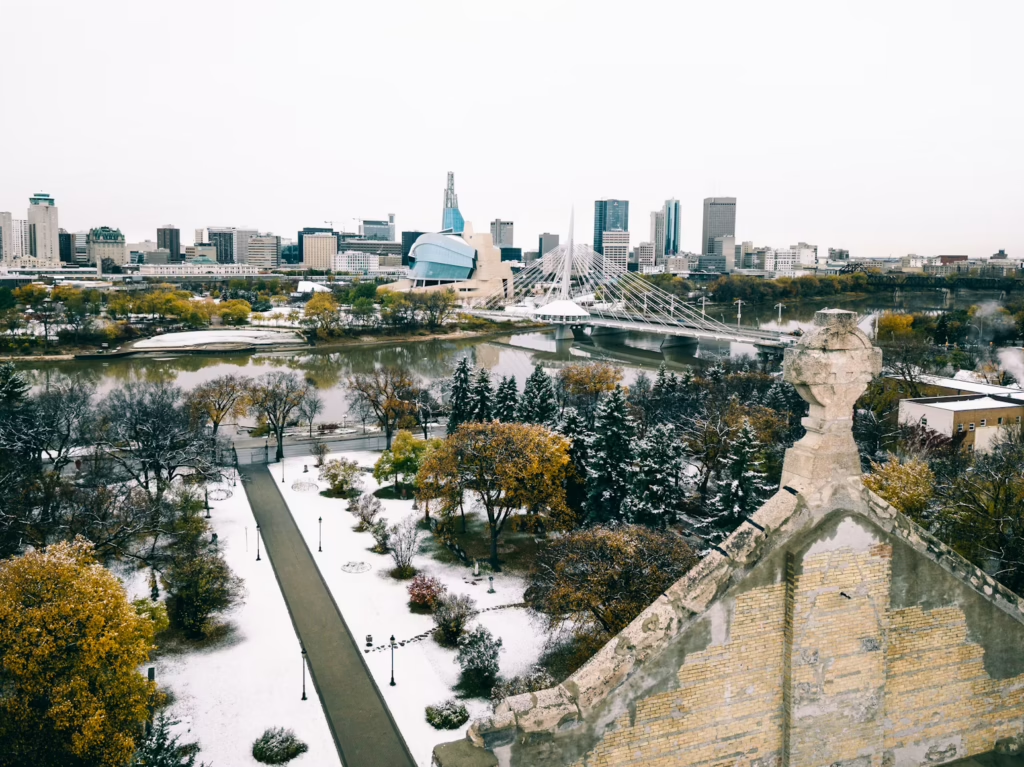
Housing Costs in Manitoba (2026)
Rental market data puts Winnipeg 1-bedroom rent at approximately $1,300 per month in 2026. That compares to roughly $2,400 in Toronto and $2,700 in Vancouver. Even smaller Manitoba cities are notably affordable.
| Location | Average 1-Bedroom Rent (2026) | Average Home Price (2026) |
|---|---|---|
| Winnipeg | ~$1,300/month | ~$427,000 |
| Brandon | ~$1,000/month | ~$280,000 |
| Thompson | ~$950/month | ~$190,000 |
| Toronto (comparison) | ~$2,400/month | ~$1,050,000 |
| Vancouver (comparison) | ~$2,700/month | ~$1,230,000 |
On the ownership side, Winnipeg’s average home price of approximately $427,000 (CREA, May 2026) is a fraction of Toronto or Vancouver. The price-to-income ratio in Winnipeg is the most favourable of any major Canadian city, meaning buyers need fewer years of household income to cover the purchase price. A household earning the Manitoba median of $78,000 per year is working with a ratio of roughly 5.5:1 in Winnipeg versus 13:1 or more in Vancouver.
The Grocery PST Elimination (July 1, 2026)
Manitoba was one of the few provinces in Canada that applied provincial sales tax to groceries. As of July 1, 2026, that ends. The Manitoba government eliminated the 7% PST on food purchased at grocery stores, effective the same date as the new fiscal year.
Most Canadians aren’t aware that Manitoba taxed groceries at all. Every other major province had already exempted basic groceries from provincial sales tax. Manitoba households were paying 7% on top of their grocery bill, a real cost that added up every week at the checkout.
The province estimates the change saves an average Manitoba family approximately $400 to $600 per year. For a household spending $600 per month on groceries, the 7% PST was adding roughly $42 per month or $504 per year. That money now stays in the household budget. The Manitoba PST rate of 7% remains in place on other goods and services; the elimination is specific to groceries.
Key Takeaway
Manitoba eliminated 7% PST on groceries effective July 1, 2026. An average family spending $600/month on food saves approximately $400 to $600 per year. Most Canadians did not know Manitoba taxed groceries at all. It was one of very few provinces that did.
Grocery and Food Costs After the PST Change
Grocery spending varies significantly by household size and eating habits. A single adult in Winnipeg typically spends $350 to $500 per month on food. A couple budgets $500 to $700. A family of four runs $700 to $900 or more. National food price tracking from Dalhousie University’s Agri-Food Analytics Lab has estimated Canadian family food costs at approximately $17,500 to $18,000 per year in 2026, reflecting continued inflation in processed and packaged goods.
Post-PST elimination, Manitoba households have a structural advantage over their pre-July 2026 bills. A family spending $800 per month on groceries was previously paying $56 in PST per month. That line item disappears from the receipt. Combined with the federal Canada Groceries and Essentials Benefit (CGEB) introduced in 2026, Manitoba families have two simultaneous grocery cost reductions landing in the same fiscal year.
Transportation: MPI Insurance and Getting Around
Manitoba uses a public auto insurance model through Manitoba Public Insurance (MPI). Unlike BC’s ICBC or private insurers in Ontario, MPI is a Crown corporation and the mandatory insurer for all Manitoba-registered vehicles. Average total premiums run approximately $1,080 per year, or $90 per month, which is one of the lowest average car insurance costs in Canada. Ontario drivers by comparison average $1,600 to $1,900 per year depending on location and driving history. For tips on bringing insurance costs down, see our guide to lowering car insurance in Canada.
Gas in Manitoba is running approximately $1.45 per litre in 2026. Combined with insurance, parking, maintenance, and financing, total car ownership in Manitoba typically runs $600 to $900 per month depending on the vehicle and how much you drive.
Winnipeg Transit monthly passes are $102 per month. Transit coverage in Winnipeg is functional but limited compared to cities like Toronto or Montreal; most Winnipeg residents outside the core rely on a car for daily commuting. Brandon and Thompson have minimal transit infrastructure.
| Transportation Option | Monthly Cost (Winnipeg) |
|---|---|
| Winnipeg Transit monthly pass | $102 |
| MPI car insurance (average) | ~$90 |
| Gas (at $1.45/L, average commuter) | ~$120 to $160 |
| Car total (insurance + gas + other) | $600 to $900 |
Utilities: Manitoba Hydro’s Low Rates
Manitoba Hydro is the provincial electricity and natural gas utility. Electricity in Manitoba comes primarily from hydroelectric generation, which keeps rates exceptionally low relative to other provinces. Residential electricity costs average $70 to $90 per month for a standard apartment or small home. Ontario Hydro customers in the same type of unit typically pay $120 to $150 per month; BC Hydro rates are lower than most provinces but still above Manitoba’s.
Natural gas for heating runs $80 to $120 per month in winter months. Summers are minimal. Annual average across the full year typically works out to $60 to $80 per month blended. Manitoba winters are genuinely cold, with Winnipeg regularly hitting -20 to -30 Celsius in January and February, so heating costs are real and shouldn’t be underestimated in annual budgeting.
Internet service in Manitoba runs $65 to $85 per month for standard home broadband. Bell MTS, Rogers, and TekSavvy are the main providers. Mobile phone plans follow national pricing and run $45 to $70 per month for a mainstream plan with adequate data.
Manitoba Income and Taxes
Manitoba’s median household income is approximately $78,000 per year. Average individual employment income is approximately $56,000. Both figures sit below Alberta ($93,000 household median) and BC ($87,000), largely because Manitoba’s economy relies more on agriculture, public services, and manufacturing than on oil and gas or high-tech sectors.
Manitoba’s provincial income tax brackets for 2026 are:
| Taxable Income | Manitoba Provincial Rate |
|---|---|
| First $47,000 | 10.8% |
| $47,000 to $100,000 | 12.75% |
| Above $100,000 | 17.4% |
At the average individual income of $56,000, the combined federal and provincial marginal rate is approximately 33 to 35%. That puts Manitoba among the higher provincial income tax jurisdictions for middle-income earners. Alberta, with its lower provincial income tax rate, takes considerably less from the same $56,000 earner. The difference in annual take-home between a $56,000 earner in Manitoba versus Alberta is approximately $2,500 to $3,000 per year after accounting for the full tax stacks.
The Manitoba PST rate remains 7% on non-grocery goods and services. This applies to clothing, electronics, household goods, restaurant meals, and most other consumer spending. With no PST on groceries as of July 2026 and no PST in Alberta at all, Manitoba sits in the middle of the Canadian spectrum on consumption tax burden.
Minimum Wage vs Living Wage: The Closest Gap in Canada
Manitoba’s minimum wage is $16.00 per hour in 2026, rising to $16.40 on October 1. The Winnipeg living wage, calculated by the Canadian Centre for Policy Alternatives (CCPA) based on actual local costs, sits at approximately $19.77 per hour (2025 update). That gap of $3.77 per hour is the smallest of any major Canadian city.
In Toronto, the gap between minimum wage and living wage is roughly $9.60 per hour. In Calgary, it’s approximately $11.50. Winnipeg’s combination of low housing costs, low car insurance, and now no grocery PST keeps the living wage calculation lower than in other cities, which is why the minimum wage covers a higher percentage of what workers actually need.
When minimum wage rises to $16.40 in October, the gap narrows further to $3.37 per hour. No other major Canadian city is as close to closing the minimum wage to living wage gap. For a more detailed look at minimum wage rates across the country, see the full minimum wage Canada 2026 guide. If you’re living paycheque to paycheque on a tight Winnipeg budget, that narrowing gap is real progress.
Key Takeaway
Winnipeg’s living wage is approximately $19.20/hour, the lowest of any major Canadian city. Manitoba’s $16.00 minimum wage covers 83% of that, the highest ratio of any province. When the minimum rises to $16.40 in October 2026, the gap closes to $2.80 per hour.
Sample Monthly Budget: Manitoba at Different Income Levels
The table below shows a realistic monthly budget for a single adult in Winnipeg at minimum wage versus at the median Manitoba income. Grocery costs reflect post-July 2026 pricing without PST.
| Expense | Minimum Wage ($16/hr, full time) | Median Income ($78K/yr) |
|---|---|---|
| Rent (1-bed, Winnipeg) | $1,300 | $1,300 |
| Groceries (post-PST cut) | $450 | $600 |
| Transit or car | $102 (transit pass) | $700 (car, MPI + gas) |
| Utilities (Hydro + gas) | $150 | $180 |
| Phone | $55 | $70 |
| Total monthly expenses | ~$2,057 | ~$2,850 |
| Estimated take-home monthly | ~$2,100 | ~$4,700 |
| Monthly surplus / deficit | +$43 | +$1,850 |
The minimum wage budget is tight. At $16.00 per hour and 40 hours per week, gross annual income is approximately $33,280. After federal and provincial income tax and CPP and EI deductions, take-home pay runs about $2,100 per month. The $43 monthly surplus leaves almost nothing for clothing, entertainment, unexpected expenses, or savings. Missing a single paycheque or facing an unplanned bill creates an immediate shortfall.
At median income, the picture is materially different. The $1,850 monthly surplus allows for savings, discretionary spending, and an emergency fund buffer. The comparison illustrates why Winnipeg is affordable for middle-income earners but remains tight for minimum wage workers despite having the narrowest living wage gap in Canada.
When a bill lands before payday, the issue is timing, not income. NotchUp lets you access wages you’ve already earned, with a flat $5 fee, no credit check, and Interac e-Transfer in about 15 minutes. NotchUp is licensed in BC (licence #86443) and regulated by Consumer Protection BC. An advance covers a timing gap between bills and your next paycheque; it isn’t a solution for the structural tightness of a minimum wage budget where the monthly surplus is under $100.

Frequently Asked Questions
Is Manitoba cheap to live in?
For housing costs, yes. Winnipeg has the lowest average rent and the most favourable home price-to-income ratio of any major Canadian city. Car insurance through MPI is among the cheapest in Canada, and Manitoba Hydro electricity rates are very low. The tradeoffs are a higher provincial income tax burden at middle incomes compared to Alberta, colder winters that increase heating costs, and incomes that run below the national average for equivalent roles.
What is the average rent in Winnipeg in 2026?
Average 1-bedroom rent in Winnipeg is approximately $1,300 per month in 2026, based on rental market data. Brandon averages around $1,000 per month and Thompson approximately $950. These figures are well below the national average for major cities, where 1-bedroom rents in Toronto exceed $2,400 and Vancouver exceeds $2,700.
Did Manitoba remove PST on groceries?
Yes. Manitoba eliminated the 7% provincial sales tax on groceries effective July 1, 2026. Manitoba was one of the few remaining provinces to tax groceries at the provincial level. The elimination saves an average family approximately $400 to $600 per year. The Manitoba PST rate of 7% continues to apply to other goods and services.
How much is car insurance in Manitoba?
Manitoba uses a mandatory public auto insurance system through Manitoba Public Insurance (MPI). The average annual premium is approximately $1,080, or about $90 per month. This is significantly lower than Ontario, where private insurance averages $1,600 to $1,900 per year, and lower than most other provinces. MPI coverage is built into vehicle registration; you can’t opt out of it in Manitoba.
What is the minimum wage in Manitoba in 2026?
Manitoba’s minimum wage is $16.00 per hour as of 2026, rising to $16.40 on October 1, 2026. At $16.00 per hour full time, gross annual income is approximately $33,280. Manitoba’s minimum wage is roughly 81% of the Winnipeg living wage of approximately $19.77 per hour (CCPA, 2025), the closest ratio of minimum wage to living wage of any major Canadian city. See the full minimum wage Canada 2026 guide for all provincial rates.
Is Winnipeg cheaper than Calgary or Edmonton?
For housing and car insurance, yes. Winnipeg’s average 1-bedroom rent is $1,300 per month versus Calgary’s $1,750 and Edmonton’s $1,400. MPI insurance averages $90 per month versus $135 to $138 in Alberta cities. Manitoba Hydro rates are also lower than Alberta’s deregulated electricity market. Alberta’s advantage is on the tax side: no PST and a lower provincial income tax rate mean higher take-home pay at middle incomes. For minimum wage earners, Winnipeg comes out ahead because the overall cost of basics is lower even after the tax difference.
How much does Manitoba Hydro electricity cost per month?
Average residential electricity bills from Manitoba Hydro run $70 to $90 per month for a standard apartment or small home. Manitoba’s hydroelectric generation keeps rates among the lowest in North America. Natural gas for heating adds $80 to $120 per month in winter, though the annual average blended across all months runs $60 to $80. Combined with internet ($65 to $85) and phone ($45 to $70), total utility and connectivity costs for a Winnipeg apartment run approximately $240 to $325 per month.
This article is general information, not financial advice. Confirm details with the relevant Manitoba provincial authority or a financial professional.
Related Reading
Related reading: Minimum Wage Canada 2026 | Cash Advance Apps Canada | Early Wage Access Apps Canada
Free NotchUp tools: Rent Affordability Calculator · Take-Home Pay Calculator